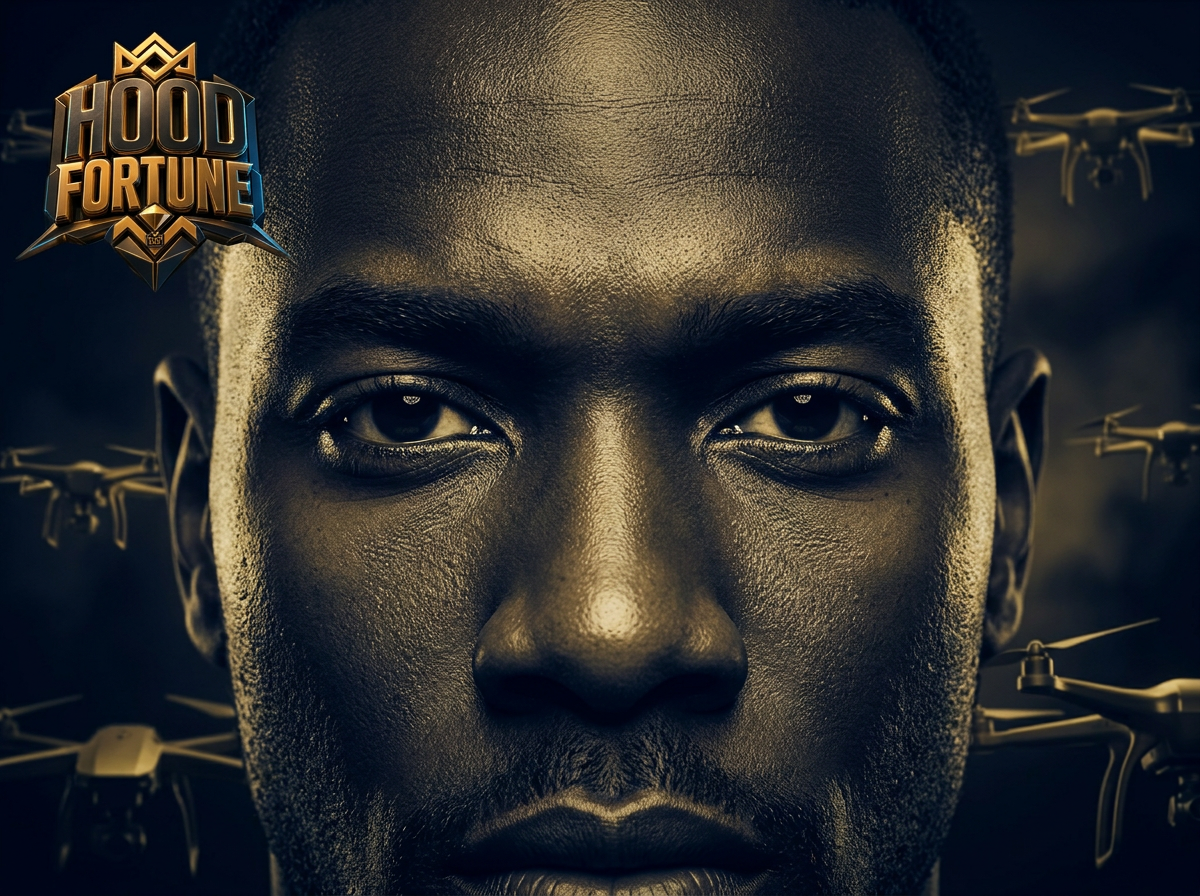
When Ermias Joseph Asghedom — known to the world as Nipsey Hussle — was murdered outside his Marathon Clothing store on March 31, 2019, the world mourned a rapper. But those who had been paying attention knew they were mourning something more: a master architect of community-based wealth.
Nipsey Hussle understood something that most celebrities never grasp: that where you're from can be your greatest business asset — if you invest in it instead of flee it.
This is the blueprint he left behind.
THE ORIGIN: CRENSHAW TO MOGUL
Born in 1985 in the Crenshaw District of Los Angeles, Nipsey was raised in a neighborhood defined by the Rollin' 60s Crips gang. He ran the streets as a teenager but always maintained an orientation toward building — studying business books, learning from mentors, and treating the hustle of the streets as a graduate course in economics.
He started releasing mixtapes in 2005. But unlike most rappers, he treated each project as a business experiment. His Bullets Ain't Got No Name series built a grassroots following without a major label push.
THE BLUEPRINT: CRENSHAW TO REAL ESTATE
Marathon Clothing Store — In 2017, Nipsey opened Marathon Clothing in the Crenshaw District — in the same neighborhood where he grew up. He signed a long-term lease on the building, then exercised an option to buy the property. The store wasn't just retail — it was a community anchor, a brand HQ, and a proof of concept for Black ownership in underinvested neighborhoods.
The $100 Mixtape — In 2013, he sold physical copies of his mixtape 'Crenshaw' for $100 each. 1,000 copies. Sold out. The strategy: scarcity plus cultural credibility equals premium pricing. Jay-Z bought 100 copies. The stunt generated national coverage and millions in free marketing.
Vector90 STEM Center — He co-founded Vector90, a coworking space in Crenshaw focused on STEM education and entrepreneurship, designed to pipeline young people from the community into the tech industry. This was Nipsey building infrastructure, not just content.
Real Estate Investments — He was in the process of purchasing the entire Crenshaw strip mall where Marathon Clothing was located. The goal: a community-owned development that would include affordable housing, retail, and resources for the neighborhood.
The Proud2Pay Model — His $100 mixtape pioneered what we now call 'superfan economics' — identifying your most loyal customers and creating premium experiences for them. It's the model Beyoncé's Renaissance Tour used, scaled to billions.
Music Masters — Nipsey retained significant ownership of his music catalog through deals with Atlantic Records that preserved his rights. 'Victory Lap' — his major label debut — debuted at #4 on the Billboard 200.
THE PIVOT: CHOOSING THE HOOD OVER THE HILLS
Nipsey could have moved to Beverly Hills. He could have distanced himself from Crenshaw to build a more palatable celebrity brand. Instead, he doubled down.
He understood that investing in your community — buying property, creating jobs, building institutions — was both morally right and strategically sound. Property values in neighborhoods with anchor businesses rise. Community trust translates to brand loyalty.
His presence in Crenshaw was a business strategy disguised as a homecoming.
WHAT THE LEGACY BECAME
After his death, the Nipsey Hussle estate continued generating significant revenue. Victory Lap and his back catalog saw massive streaming increases. Marathon Clothing became a pilgrimage site. A mural on Crenshaw and Slauson became one of the most photographed locations in Los Angeles.
His estate, managed in part by his partner Lauren London and his family, has continued his vision — including a posthumous Grammy win, memorial concerts, and continued development of the Crenshaw community projects.
In death, his blueprint became a curriculum.
YOUR BLUEPRINT: THE MARATHON CONTINUES
- 1
Invest in the neighborhood, not away from it. Property in underinvested communities is the best risk-adjusted real estate investment in America. Nipsey knew this before the gentrification wave.
- 2
Premium pricing signals quality. The $100 mixtape didn't limit his audience — it elevated his brand. Price your work at what it's worth, not what you're afraid to ask.
- 3
Build infrastructure, not just content. Vector90, Marathon Clothing, the strip mall — these are assets that survive any single album cycle.
- 4
Retain your rights. Negotiate masters ownership from the beginning. A catalog that keeps paying long after you're gone is generational wealth.
- 5
The marathon continues. Nipsey's mantra was 'the marathon continues' — the idea that progress compounds if you commit to the long game. That's not just a slogan. That's a business model.
Nipsey Hussle didn't just build a business in Crenshaw. He built a vision of what Black ownership could look like in every hood in America — buy the block, build the infrastructure, employ the community, and pass the blueprint down. The marathon is still running. Your job is to pick up where he left off.
Hood Fortune Magazine
Where the Streets Meet Success